
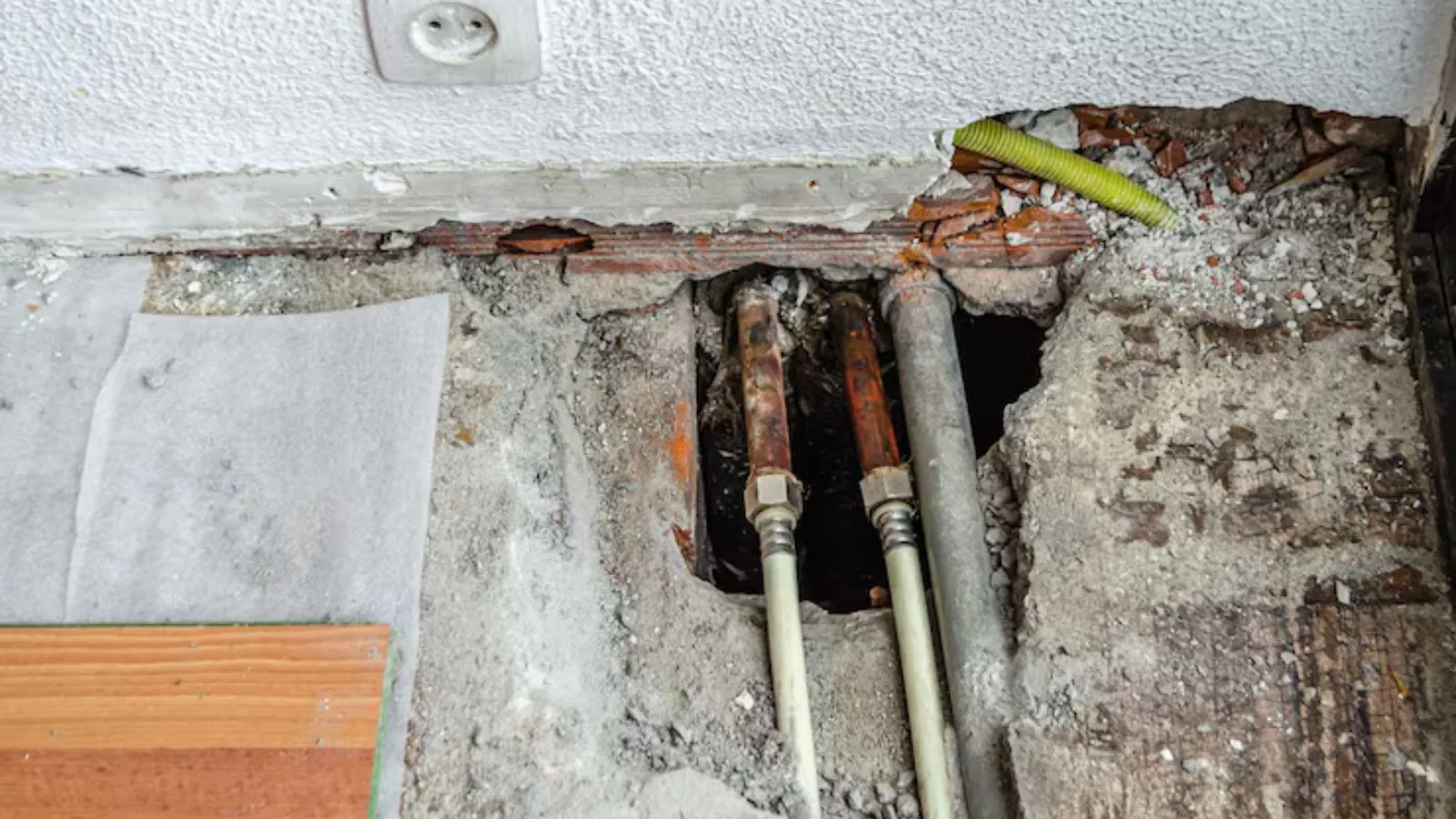
What we know about soil and slab leaks
Georgia's Piedmont region, which includes all of Athens-Clarke County, sits on a base of decomposed granite that weathers into the region's distinctive red clay. Clay soils in general can swell when wet and shrink when dry, though the USDA lists the Appling series as low in shrink-swell. Over a wet winter followed by a dry summer, that cycle repeats every year, and it doesn't just affect your lawn.
A concrete slab sits on the ground, and supply lines run under or through it, so ground moisture and movement are things we consider. That's not a hypothetical risk. It's the specific, ongoing mechanical stress that eventually cracks a joint or wears through a section of copper pipe.
Why older neighborhoods see it most
Homes built on slab foundations in Athens from the 1960s through the 1980s are the ones we see most often for this exact problem. Copper supply lines from that era are old enough now that age and wear are a common reason for leaks.
It's a predictable pattern, not a random one: if a neighbor's house from the same subdivision and era has had a slab leak, yours is worth checking too, even without symptoms yet. Catching it early, through a proactive leak detection visit, is meaningfully cheaper than waiting for a water-bill spike or visible floor damage to force the issue.
What a slab leak actually looks like
None of these symptoms scream slab leak on their own, which is exactly why they get missed or misattributed for weeks. If more than one shows up at once, it's worth a call.
- A warm patch on the floor with no heating element nearby
- Water pooling at the edge of a slab, often near the garage
- A water bill that's climbed with no change in household usage
- The sound of running water when every fixture in the house is off
The fix doesn't always mean tearing up the floor
Once a leak is precisely located, the repair path depends on where it sits. A single, isolated leak in an otherwise sound system usually gets a targeted spot repair through a small section of the slab. If the same house has had more than one slab leak, that's a sign the whole system may be reaching the end of its useful life.
A full reroute around the slab, run through the attic or a wall cavity, is often the more honest long-term answer even though it costs more upfront.
Our slab leak repair page goes into more detail on both paths. If the leak has already caused visible damage to flooring or drywall, that's a separate job handled by a water damage crew, not folded into the plumbing repair itself.
It's not just an Athens problem
The same clay and granite bedrock extends well beyond the city limits. In Watkinsville, where a lot of the housing stock spans the same 1960s-to-1980s era near the historic square, we see an identical pattern. If you live in an older slab-foundation home anywhere in this region, a leak check is worth considering before a problem forces the issue.
Insurance and slab leaks
Homeowner's policies vary on this, but a common pattern covers the water damage a slab leak causes while treating the plumbing repair itself as excluded maintenance. Reading your specific policy's language on slab and foundation-related water damage before you need it, rather than during an active claim, is worth the ten minutes it takes.
Photographing any visible warping, staining, or cracking as soon as you notice it gives your insurer the clearest possible picture of when the damage started, which matters more than people expect when a claim gets reviewed.
Renovation as a natural checkpoint
If you're already planning a flooring renovation in a slab-foundation home from the higher-risk era, that's a natural, low-cost opportunity to have the slab checked before new flooring goes down. A leak found before renovation is dramatically cheaper to address than one discovered after new tile or hardwood is already installed.
Some homeowners in Athens' older slab-foundation neighborhoods choose a proactive leak-detection sweep ahead of a major renovation.
One more real signal: neighboring homes
Slab leak patterns tend to cluster by subdivision and construction era, since homes built by the same builder in the same window often share the same pipe material and foundation approach.
If a neighbor in a similarly aged home nearby has dealt with a slab leak, that's a genuine, practical reason to have your own home checked, even without symptoms yet, rather than assuming your house is somehow the exception on the same street.
Being proactive here is the whole point: a five-minute conversation with us about your home's age and foundation type costs nothing and tells you honestly whether you're in the higher-risk category worth watching. There's no cost to asking, and it beats finding out the hard way. None of this is meant to be alarming.
What matters is locating the leak first and then looking at pipe age and material, so we diagnose it instead of guessing. A quick check today beats a bigger repair tomorrow. We're glad to walk through your specific home's risk profile over the phone, free of charge, before you decide whether a proactive check makes sense for your particular situation and budget.
Athens soil notes from the USDA
The USDA Official Series Description for Cecil soil lists a well drained class and red clay layers. The Appling series is also well drained, and its shrink-swell potential is listed as low. We did not verify which series are mapped under a given Clarke County lot.
So we do not assume soil movement is the cause of a slab leak. We locate the leak first, then look at pipe age, material, and water chemistry before we say what caused it.
Sources: USDA Cecil series, USDA Appling series.
We serve Watkinsville and Winterville as well as Athens. Related work: slab leak repair and leak detection.
A local question about slab leak repair
Does red clay cause slab leaks in Athens?
Soil records for the Cecil and Appling series list them as well drained, and Appling is listed as low shrink-swell. We locate the leak first and look at pipe age and material before naming a cause.