
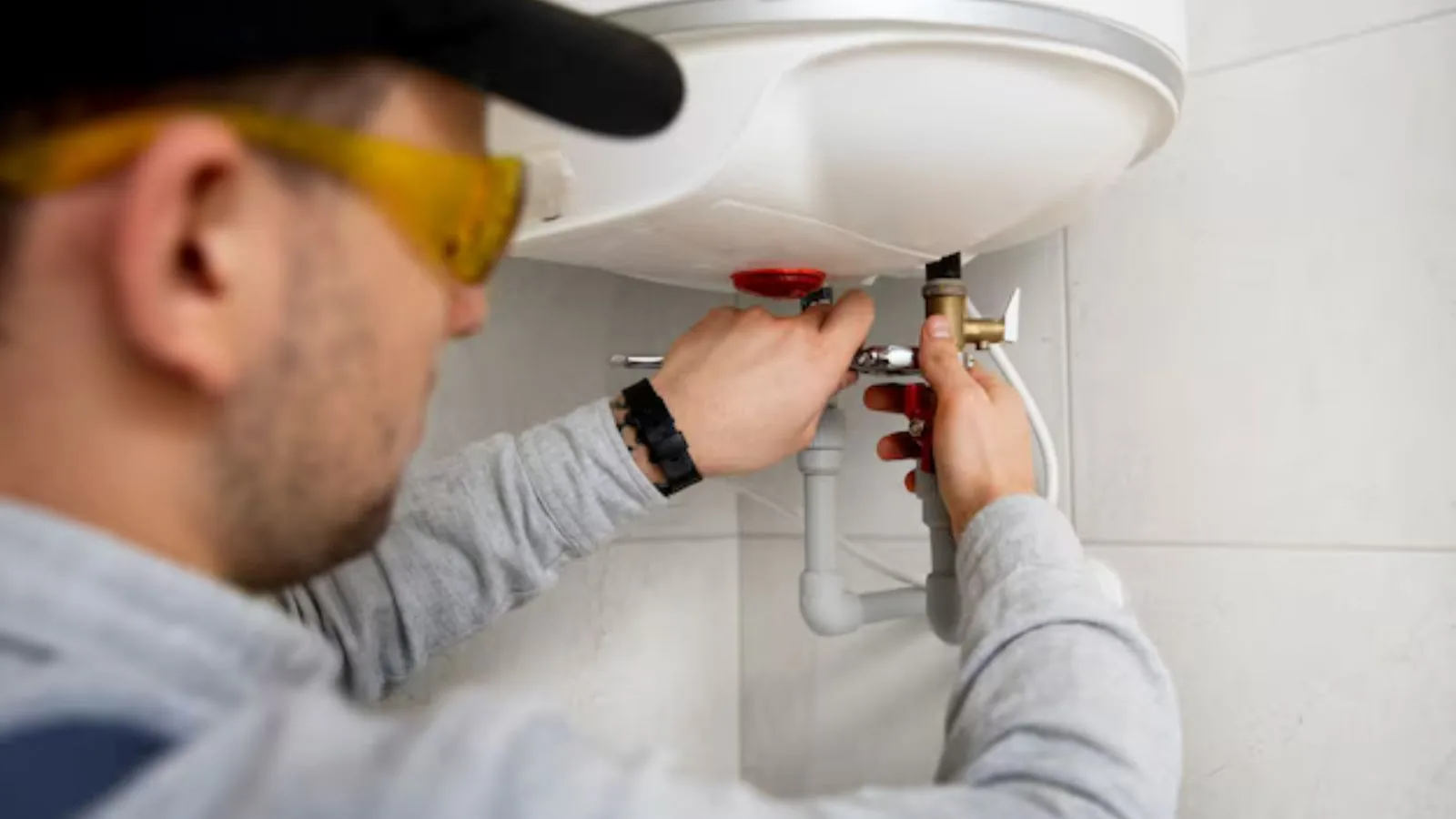
Emergency water heater repair: when a leak or no hot water cannot wait
A water heater is an emergency when it is leaking onto the floor, when water keeps running from the relief valve line, or when a closet, garage, or attic is already wet. No hot water on its own is urgent but usually safe to schedule. A leak is a reason to call now.
Close the cold water supply to the heater, and turn off the power at the breaker if it is electric. If it is gas, turn the control to off. Keep away from outlets if the floor is wet, then call dispatch.
Call right away if
- Water spreading from the tank, its connections, or the drain valve
- A relief valve line that runs or drips without stopping
- Rust-colored water or a tank rusted through at the bottom
- A heater in an attic or upstairs closet leaking toward a ceiling
What actually fails first on an Athens water heater
The anode rod and the lower heating element take the brunt of hard water and sediment. Sediment settles at the bottom of the tank faster here than in a soft-water city, which insulates the lower element and makes it work harder. That's the direct, practical reason a tank water heater in an older in-town Athens home often needs its first repair sooner than the manufacturer's typical timeline suggests.
In University of Georgia rental housing especially, where the unit is original to the house, we see anode rods fully consumed well ahead of schedule.
In University of Georgia rental housing specifically, where multiple tenants share a single water heater sized for a smaller household, we see repeat repair calls tied to a unit that's simply undersized for its actual demand, not failing from age. That's worth flagging to a landlord even when the immediate call is a straightforward repair.
Water heaters in Five Points and Normaltown
Five Points is a 1920s-era neighborhood, and Normaltown has older homes along Prince Avenue. In an older house the heater may sit in a closet or crawlspace. We look at sizing and access along with the failed part.
Signs you need water heater repair
- No hot water, or it runs out much faster than before
- Water heater making popping or rumbling sounds (usually sediment)
- Water has a metallic or rotten-egg smell
- Visible moisture or rust at the base of the tank
Emergency steps: what to do right now
- Do not attempt to relight a gas pilot yourself if you smell gas near the unit, leave the area and call your gas utility first
- Turn off power at the breaker before inspecting an electric unit for a suspected leak
- Avoid touching the tank or pipes near a suspected leak until power or gas is confirmed off
- Call promptly if you notice a rotten-egg smell, that can indicate a gas safety issue, not just a water heater issue
How we diagnose and fix it
We test the thermostat and heating elements directly with a multimeter rather than guessing from symptoms alone, check the anode rod condition, flush accumulated sediment, and pressure-test the tank if a leak is suspected. A leaking tank gets identified as a tank issue, not confused with a supply-line or fitting leak nearby.
A tank under 8 years old with a failed element or thermostat is almost always a repair, not a replacement. Past 10 years, or with a confirmed tank leak, we'll give an honest repair-versus-replace comparison rather than pushing a replacement on a unit that still has useful life left.
Tank water heaters are required under Georgia's plumbing code (the International Plumbing Code, or IPC, with state amendments) to have a properly sized temperature-and-pressure relief valve with a compliant discharge line. We check this on every repair visit even when it isn't the reason for the call, since it's a real safety item, not an upsell.
Avoiding the next call
An annual sediment flush and an anode rod check add years to a tank water heater's service life in Athens specifically, given how much faster sediment accumulates here than in soft-water regions. We can add this to a service visit even when the original call was for something else, since it's a cheap way to avoid the next emergency call.
What affects the cost
- Whether the failure is the anode rod, an element, a thermostat, or the tank itself
- Tank age and total sediment buildup
- Gas versus electric unit, which changes labor and parts
- Emergency same-day dispatch versus a scheduled repair window
Every water heater repair job in Athens gets a real number before work starts. Want your real number? Call (770) 214-4545.
On insurance: Most water heater repairs are considered maintenance and generally aren't covered by homeowner's insurance. If a tank fails suddenly and causes water damage to flooring or drywall, that resulting damage is often covered even though the unit replacement itself typically isn't.
Where a leaking water heater is leaking from
Not every leak means the tank is finished. Connections, valves, and fittings can fail while the tank is sound. A leak from the body of the tank is different, because a tank that leaks from inside cannot be repaired. We tell you plainly which case you have.
When replacement is the answer, our water heater installation and replacement page explains the options, including tankless.
Tank body or seams
Water from the bottom or sides of the tank usually means the tank has failed and needs replacement.
Connections and valves
A loose or corroded supply connection, a weeping drain valve, or a relief valve can often be repaired.
Attic and closet units
Heaters above living space can damage ceilings fast. Shut off the water to the unit first, then call.
No hot water and no leak
If there is no leak and no hot water, check that the heater has power or gas and that the breaker has not tripped. Heating elements, thermostats, pilot assemblies, and gas valves are common causes. Tell dispatch what you checked so we arrive with the right parts.
Age matters too. We explain whether a repair is worth making on an older tank or whether replacement makes more sense.
Emergency questions about water heater repair in Athens
Why does my water heater smell like rotten eggs?
That's usually a reaction between the anode rod and bacteria in the water, not a gas leak. We can replace the rod and flush the tank to resolve it.
Is a leaking water heater an emergency?
Yes, call right away. A tank leak only gets worse, and it can damage flooring and drywall the longer it runs.
Do you repair both gas and electric water heaters?
Yes, we repair both, along with tankless systems.
How much does water heater repair usually cost?
It depends on the specific part, an element or thermostat repair is on the lower end, a full tank replacement is more. We give a real number before starting, not an estimate range.
Is a leaking water heater an emergency?
Yes, when water is spreading or the relief valve line will not stop. Close the cold supply to the heater, shut off its power, and call dispatch. A slow drip at a fitting you can contain may allow a scheduled visit.
What should I shut off first?
Close the cold water valve above the heater. If it is electric, turn off its breaker. If it is gas, turn the control to off. Then call so we can plan the repair.
Why do I have no hot water but no leak?
Common causes are a tripped breaker, a failed heating element or thermostat, or a pilot or gas valve problem. Tell dispatch what you tried and we bring the likely parts.
Should I repair or replace an older leaking tank?
A leak from the tank body means replacement. A leak at a connection or valve can often be repaired. We say plainly which one it is.
Other work we handle nearby
If the unit is past its realistic repair life, our water heater installation & replacement page covers what a swap actually involves. For households running a tankless system instead, our tankless water heater service page covers the different failure pattern. In Winterville and other older-housing pockets of Clarke County, we see this exact anode-rod pattern often enough that it's worth asking about proactively during any service call.