Why tankless units are more sensitive to water quality
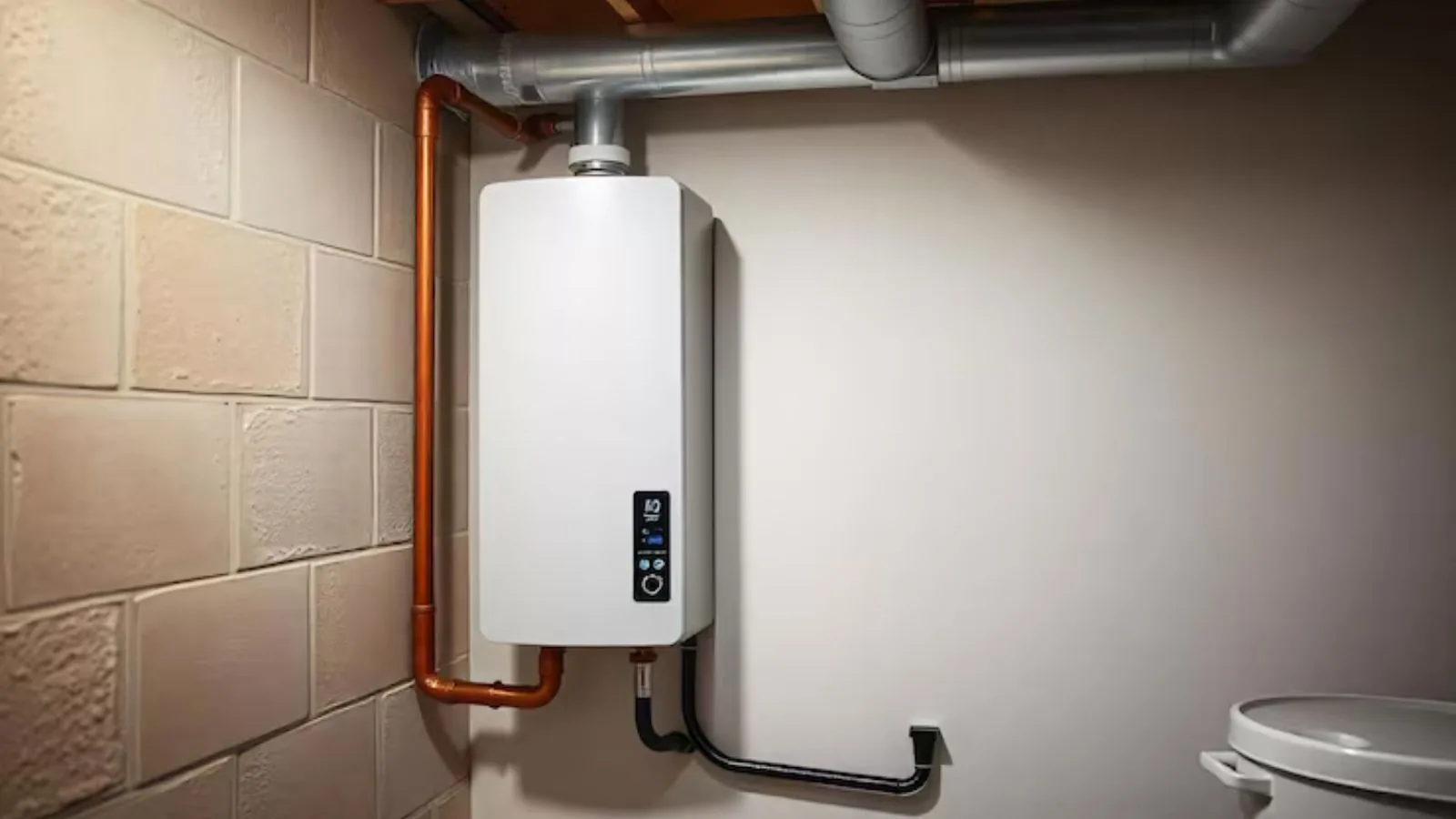
A standard tank water heater has a large volume of water sitting in the tank at any given time, which spreads out mineral deposits across the tank's interior surface and the anode rod. A tankless unit works differently: water passes rapidly across a compact heat exchanger every time it fires, and any minerals in that water concentrate on that same small surface every single cycle.
That is a real mechanical difference, and it is why tankless units tend to need descaling when the water is hard.
Athens' water, specifically
We did not find a published hardness figure for Athens, so we do not assume one. The utility's water quality report is the place to check. For a tankless unit, follow the descaling interval in the manufacturer's manual, and shorten it if a test shows hard water.
What happens if you skip it
None of these happen overnight, which is exactly the problem: the decline is gradual enough that a lot of owners don't connect it to a missed descaling until the unit fails outright.
- Reduced flow rate and inconsistent water temperature
- Error codes from the unit's internal sensors
- Reduced overall efficiency and higher energy use for the same output
- Premature heat exchanger failure, sometimes years ahead of the rated lifespan
What the service actually involves
A proper descale flushes the heat exchanger with a descaling solution circulated through isolation valves, checks the inlet water filter, and inspects the venting for scale-related blockage. Our tankless water heater service page covers the full process, including how we check whether a unit is actually sized correctly for the household's simultaneous hot water demand, a separate issue from water quality but one that shows up with similar symptoms.
Softening the water helps meaningfully
A whole-home water softener installed ahead of a tankless unit reduces the mineral load reaching the heat exchanger in the first place. That extends the interval between services and is worth factoring into the total cost of ownership when you compare a tankless system against a standard tank.
Signs the descale is overdue right now
A unit overdue for descaling doesn't always announce itself clearly. Watch for hot water taking noticeably longer to reach full temperature than it used to, any error code showing on the unit's display, or water temperature fluctuating mid-shower rather than staying steady. Any of these on a unit that hasn't been serviced in over a year is worth a call before it progresses to a harder failure.
If you're not sure when the unit was last descaled, and there's no maintenance record from a previous owner or installer, assume it's overdue. Schedule a service visit as a baseline, especially on a unit you inherited with a home purchase.
Choosing between tank and tankless with Athens' water in mind
A tankless unit's higher upfront cost and ongoing descaling requirement need to be weighed honestly against a standard tank's simplicity and lower maintenance demand, especially given Athens' water. For a household that will reliably keep up with descaling, a tankless system's space savings and endless hot water are real advantages. For a household that's likely to skip maintenance, a standard tank, with its more forgiving failure pattern, may be the more practical choice regardless of the tankless format's other benefits.
There's no universally right answer here. It genuinely depends on the household's habits as much as its hot water needs, and we'll walk through that honestly rather than pushing whichever system costs more.
Gas versus electric tankless units
Gas tankless units generally handle higher simultaneous hot water demand better than electric models. That matters more for larger households, but electric units are simpler to install where gas service isn't already run to the water heater location, avoiding the cost of adding a gas line. Both formats face the same descaling requirement given Athens' water. The fuel type doesn't change the maintenance need at all.
A household considering a switch from gas to electric tankless, or vice versa, as part of a replacement should factor in the electrical or gas capacity upgrade cost alongside the unit cost itself, since that's often a larger line item than people initially expect.
Warranty considerations
Most tankless manufacturers require documented, regular maintenance to keep the warranty valid, so keep your service records. Keeping simple records of when descaling service was performed protects both the unit's lifespan and your ability to make a warranty claim if something does go wrong within the coverage period.
A final word on total cost of ownership
When comparing tankless against tank long-term, factor in the real descaling cost over a 10-to-15-year horizon alongside the purchase and installation price. A tankless unit that's properly maintained on schedule genuinely outlasts a comparable tank system in most cases, but that math only holds if the maintenance actually happens on schedule, not just in theory.
Whichever format you choose, the real deciding factor in Athens is whether the household will actually keep up with the water-quality-driven maintenance schedule. That single factor matters more here than almost any spec sheet. Whatever you decide, the honest comparison matters more than defaulting to whichever system happens to be trending. Your household's actual usage pattern is what should drive the decision.
Call us to talk through what actually fits your household. We're glad to walk through your household's specific hot water needs before you commit to either format.
Athens-Clarke notes on your water source
Athens-Clarke Public Utilities says the city's drinking water comes from the North Oconee River, the Middle Oconee River, and the Bear Creek Reservoir. The utility publishes a Drinking Water Quality Report each year.
We did not find a hardness figure on the pages we could read, so ask the utility for its current report. If you are on a private well, a lab test that includes calculated hardness tells you more than any general claim about local water.
Sources: Athens-Clarke Drinking Water Quality, UGA AESL water sample form.
We serve Bogart and Watkinsville as well as Athens. Related work: tankless water heater service and water softener service.
A local question about tankless water heater service
How do I find out how hard my Athens water is?
Ask Athens-Clarke Public Utilities for its current Drinking Water Quality Report. On a private well, the University of Georgia lab offers a water test that includes calculated hardness.